Do Epoxy Floors Fail in Florida?

“If an epoxy floor fails, it’s almost never random—something was either skipped during install or mishandled after.”
If you’ve ever seen an epoxy floor start peeling, bubbling, or lifting, you’re not crazy—it happens all the time. And most of the time, it’s not because epoxy “doesn’t work.” It’s because something in the process was done wrong, or the floor wasn’t treated the way it should be after.
Florida is one of the easiest places for epoxy floors to fail if they’re not installed correctly. Between the heat, humidity, and constant moisture in the concrete, there’s a lot working against it from the start. So if you’re thinking about getting epoxy—or you’ve already had issues—this will help you understand where things usually go wrong and how to avoid it.
What You’ll Learn in This Guide
Why epoxy floors actually fail (not what most people think)
How Florida heat and moisture affect your floor
Where contractors cut corners during install
How maintenance and usage impact longevity
What to look for to make sure your floor lasts
Do Epoxy Floors Fail in Florida?
The biggest issue we see, especially in Florida, is moisture coming up through the concrete. Concrete naturally holds moisture, and in a humid environment like Tampa, that moisture is always moving. If it’s not handled properly before the coating goes down, it will push up from underneath and start causing issues like bubbling, peeling, and lifting. That’s why a moisture vapor barrier is such a big deal. It’s not an “extra”—it’s what protects the floor long-term. Skipping it might save time or money upfront, but it’s one of the fastest ways to guarantee problems later.
Right behind that is surface preparation, which is honestly the most important part of the entire job—and also the part most people never see. If the concrete isn’t properly ground, cleaned, and repaired before anything is applied, the coating has nothing solid to bond to. And when that happens, it doesn’t matter how good the materials are, the floor is eventually going to fail. This is also one of the first places corners get cut when someone is trying to move faster or offer a lower price.
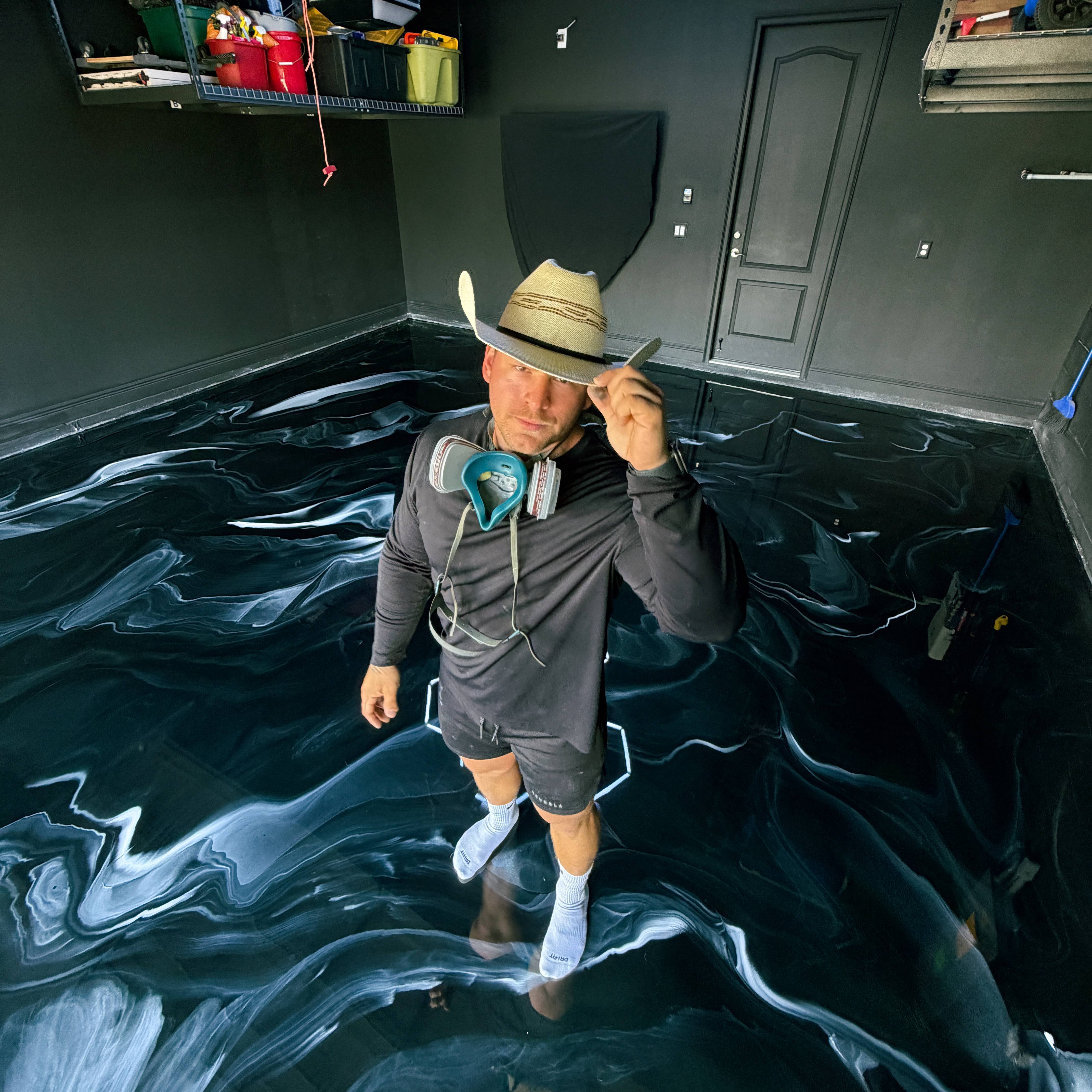
Another thing people don’t realize is that epoxy isn’t just one layer—it’s a full system. A metallic floor, for example, should include a moisture vapor barrier, a basecoat, the decorative metallic layer, and then a topcoat to lock everything in. A flake system follows a similar idea with a moisture vapor barrier, a full broadcast of flake, and a protective topcoat. Each of those layers has a purpose. So when a contractor skips one, thins things out, or rushes through the process, it may not show right away—but it will over time.
Now here’s the part that a lot of companies won’t talk about, but it matters just as much. Even when a floor is installed correctly, how it’s treated afterward plays a role in how long it lasts. Letting water sit on the surface for extended periods, using harsh or incorrect cleaning products, or simply not maintaining the floor at all can start to break things down over time. Epoxy is durable, but it’s not indestructible. And in many cases, damage caused by neglect or improper care can actually void a warranty, because it falls outside of normal use. That’s not meant to scare you—it’s just something most people aren’t told upfront.
Materials also play a role in how a floor performs. Not all epoxy systems are created equal, and lower-cost installs often rely on thinner coatings or lower-grade products to keep pricing down. It might look good at first, but with Florida heat, moisture, and daily use, those shortcuts start to show up quicker than people expect.
And then there’s time. Epoxy isn’t something you want rushed. It needs proper prep, proper application, and time to cure the right way. When a job is pushed too fast to fit more installs into a schedule, quality drops—and that’s when problems start showing up down the line.
The reality is, most epoxy floor failures come down to either corners being cut during installation or the floor not being properly cared for after. Both are avoidable if you know what to look for going in.
If epoxy is done right from the start and taken care of the way it should be, it’s one of the best upgrades you can make to a garage. It holds up to Florida conditions, lasts for years, and completely transforms the space. But that only happens when the full process is followed and expectations are clear on both sides.
Get It Done Right the First Time
If you’re in the Tampa area and want to make sure your floor is done the right way from the beginning, click this link- we can take a look at your space and walk you through exactly what it needs. That way you’re not guessing—and you’re not dealing with problems later.
We take the process seriously from the start, including using a moisture vapor barrier (MVB) on every floor, so we can stand behind our work and offer a warranty with confidence, knowing the foundation was done right.