Average Epoxy Flooring Cost in Tampa

“If you’ve been looking into epoxy flooring for your garage, you’ve probably already noticed one thing—pricing is all over the place.”
If you’ve been looking into epoxy flooring for your garage, you’ve probably already noticed one thing—pricing is all over the place. One company gives you a low number, another comes in way higher, and it’s hard to tell what’s actually real and what’s not.
The truth is, epoxy pricing isn’t random. There’s a reason behind every number you’re getting. And if you don’t understand what goes into it, it’s really easy to choose the wrong option and end up paying for it later.
In this guide, I’m going to break everything down in a way that actually makes sense, so you can make the right decision the first time.
What You’ll Learn in This Blog
Real epoxy flooring prices in Tampa – what you should actually expect to pay
Why some quotes are much cheaper than others – and what’s usually being skipped
How contractors cut time to stay profitable – including skipped prep and missing coatings
The difference between flake and metallic systems – and what goes into each
How to avoid getting a floor that fails – and what to look for before hiring
Average Epoxy Flooring Cost in Tampa
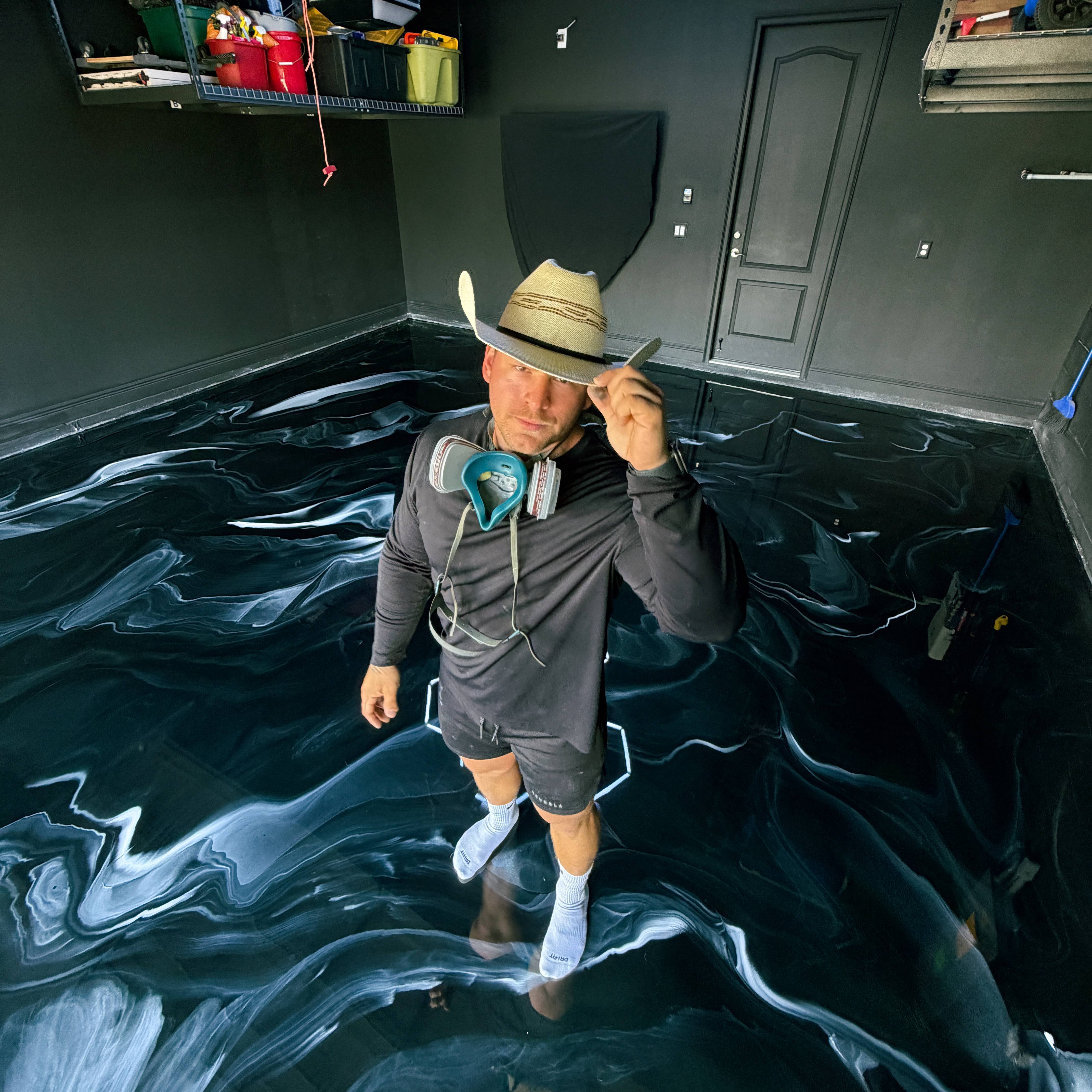
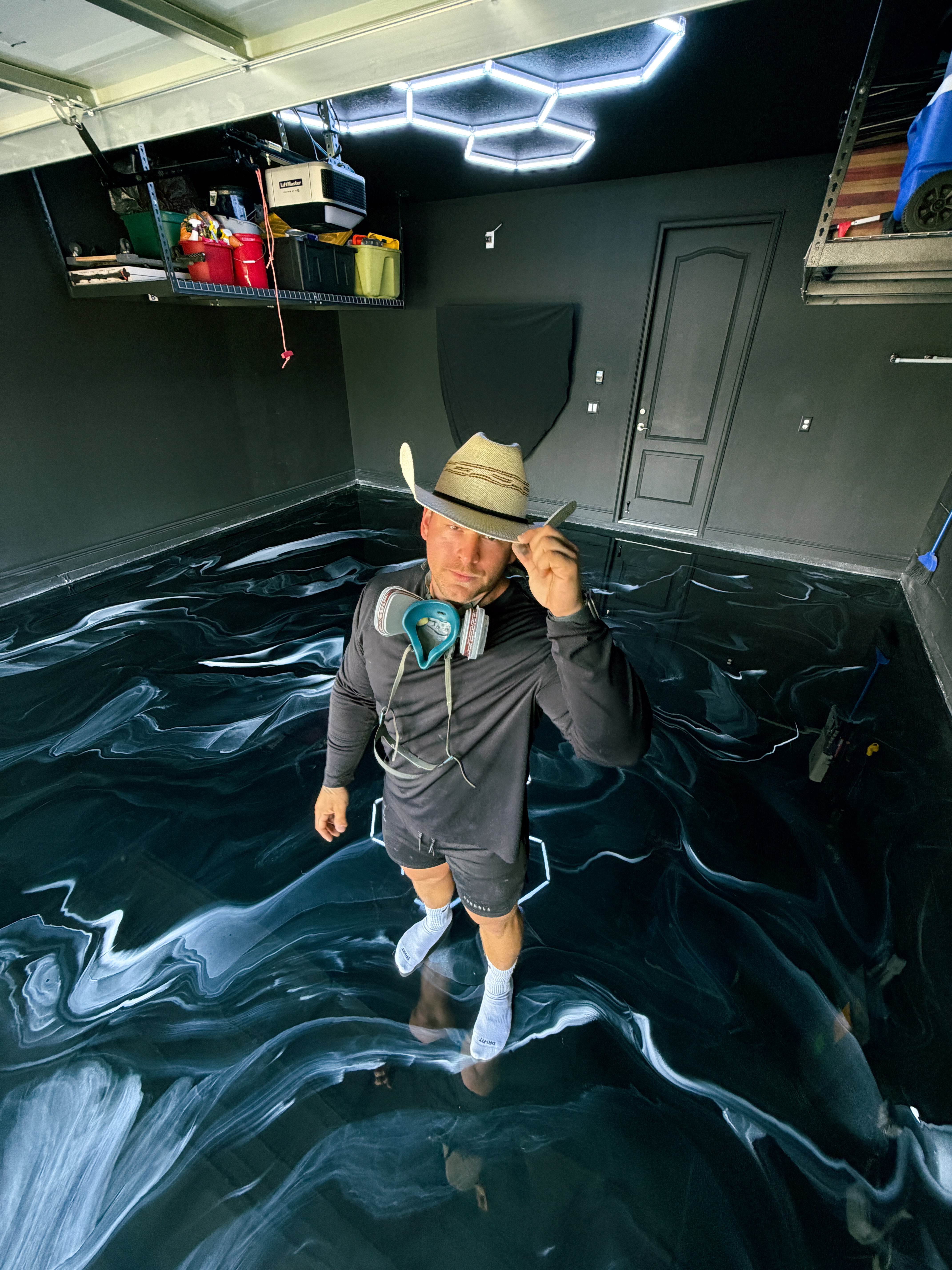
In the Tampa area, most professionally installed epoxy floors fall into a pretty consistent range. A standard flake epoxy floor is usually between $5 to $7 per square foot, while a metallic epoxy floor—something more custom and high-end—typically runs between $8 to $12 per square foot.
For a normal two-car garage, that usually puts you around $2,500 to $3,500 for a flake system and anywhere from $4,000 to $6,000 or more for a metallic floor. That’s what you should realistically expect if the job is being done correctly from start to finish.
Why Some Epoxy Quotes Are So Much Cheaper
Where people get tripped up is when they start getting quotes that fall way below that range. And look—I get it. It’s tempting to go with the lower number.
But at the end of the day, every contractor still needs to be profitable. So if someone is offering a significantly lower price, it’s not because they’ve figured out how to magically do the same job cheaper. It usually means they’re cutting time somewhere in the process to make the numbers work.
And in epoxy, time is money. The faster a contractor can move through your job, the more jobs they can take on that week. So the easiest way to lower cost is by speeding things up—and that usually means skipping steps.
What a Proper Epoxy System Actually Includes
A proper epoxy floor isn’t just one coat rolled on and called a day. It’s a full system.
For example, a metallic epoxy floor typically includes a moisture vapor barrier (MVB), a basecoat, the decorative metallic layer, and then a topcoat to lock everything in. Each one of those layers plays a role in how the floor performs and how long it lasts.
If a contractor skips something like the MVB or cuts down part of that process, they save time—which allows them to lower the price while still staying profitable. The issue is, that’s where long-term problems start to show up.
Flake Floors vs. Metallic Systems (What Gets Skipped)
The same idea applies to flake floors. A properly installed flake system includes a moisture vapor barrier, a full broadcast of flake, and a protective topcoat. That’s what gives it its durability and clean, uniform finish.
But if someone skips the MVB, doesn’t fully broadcast the flake, or rushes straight into the topcoat, they can shave hours off the job. It may look fine at first, but over time, those shortcuts show up in wear, adhesion issues, and overall durability.
Why Prep Work Matters More Than Anything
Prep work is another huge factor that most people don’t think about—but it’s honestly the most important part of the entire job.
Proper surface prep includes:
Grinding the concrete
Repairing cracks
Making sure the surface is fully ready to accept the coating
It’s also the most time-consuming part of the process, which makes it the first thing that gets rushed when someone is trying to cut costs.
The problem is, if the prep isn’t done right, it doesn’t matter how good the materials are—the floor is going to fail. This is where you start seeing peeling, lifting, and coatings breaking down much sooner than they should.
Materials Matter More Than You Think
Materials also play a role in pricing. Lower-cost installs often rely on thinner coatings or lower-grade products to bring the price down.
It may not be obvious right away, but with Florida heat, moisture, and daily use, those differences start to show over time.
The Truth About Cheap Epoxy Flooring
You can absolutely find cheaper epoxy flooring—but it’s important to understand what you’re actually getting.
Most of the time, that lower price is made possible by:
Skipping steps
Cutting prep time
Simplifying the system
That’s how contractors are able to stay profitable while charging less. The issue is, those are the same floors that end up needing repairs or full replacements later.
Is Epoxy Flooring Worth It?
If epoxy flooring is done correctly the first time, it’s one of the best upgrades you can make to your garage. It holds up to heat, moisture, and wear, and completely transforms the space.
But that only happens when the full process is followed and nothing is rushed.
Get a Real Quote for Your Garage
Every garage is different, and things like the condition of your concrete, the size of the space, and the system you choose all play a role in the final price.
If you want a real number based on your actual garage—not a generic estimate—you can click this link and we’ll take a look at your space and give you a clear, honest quote so you know exactly what to expect.